Software Testing: The Backbone of Reliable Applications
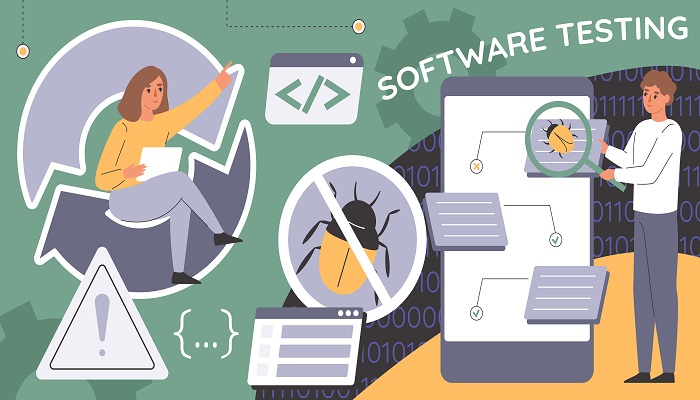
Software
Testing Made Simple: What You Need to Know
Today's world of advanced technology
uses a wide range of software applications, from those on our cell phones to
those in banks, in medicine, and in learning software. However, have you
thought about how these applications function without errors or crashes? The
answer to keeping these software applications error-free and crash-free, just
for the benefit of their customers, is Software Testing.
What Is Software Testing?
Software testing is the methodical
process by which the testing team examines the software application for the
detection of errors and defects or the identification of the missing
functionalities in the application. The software testing is done in order to
examine how the application is functioning as expected in different scenarios.
The primary purpose of the software testing is the improvement in the quality
of the application.
Why Is Software Testing Important?
Software
testing is termed as a testing and evaluation process carried out on a software
application in order to determine possible bugs within it, as well as
differences in behavior between what is expected and what is actual. The
importance of software testing is pointed out because no software is bug-free
upon development.
Testing
is just one of the ways that a software program is able to meet the needs of
users. It is capable of working effectively in a number of different ways. It
has the capacity to help a software program detect some problems early in the
development of software. It will be less costly to repair when it becomes a
problem. It may be extremely important when it is banking, healthcare, or
aerospace software.
This
could result in the system being prone to crashes, security issues, or
ineffectiveness since it may not have been properly tested. This could affect
the company’s reputation.
Benefits of Software Testing
Below are the benefits of software
testing to both the Developer and User:
- Enhanced Software Quality:
Testing confirms whether the software is stable and reliable.
- Provides a Better Experience for Consumers: Immaculate applications would definitely increase customer
satisfaction.
- Cost Effective:
The treatment of a defect after diagnosis is expensive; hence it's
cost-effective to diagnose a defect earlier.
- Security Implementation:
It assists in identifying the vulnerabilities which a hacker may use to
penetrate the system.
- Business Reputation:
High-quality software promotes a positive reputation for the business.
- Scaling Support: The software tested is scalable even in the presence of other users.
On a bigger scale, software testing
acts as a boundary that does not allow defective software to reach the market.
Careers in Software Testing
Software testing & quality
assurance is a recognized profession in the software industry. The software
industry is highly dependent on software solutions. Hence, ensuring software
correctness is a prime requirement for software testing professionals.
- They work together with developers to identify bugs in software prior to its release.
- The common categories for entry-level candidates are Trainees/Junior Testers.
- These may come from the following areas: automation, usability, mobile, cloud, etc.
- Expert skills enable testers to match the pace of changing technology.
- Senior testers assist in test planning, risk analysis, and quality audits.
- Examples of senior-level roles would be QA Lead, Quality Manager, and/or Test Consultant.
- Software testing has its applications in various areas of software development.
- It provides opportunities for continuous growth.
Conclusion
Software Testing helps to achieve the most essential facets
of software development, such as quality and user satisfaction. Testing not
only removes bugs, but it also makes sure that the software is bug-free and
reliable and performs its tasks with efficiency. Along with the advancements in
technology, the demand for software testing is also going to rise dramatically.